AC Repair Colorado Springs, Fixed Right at 6,000 Feet
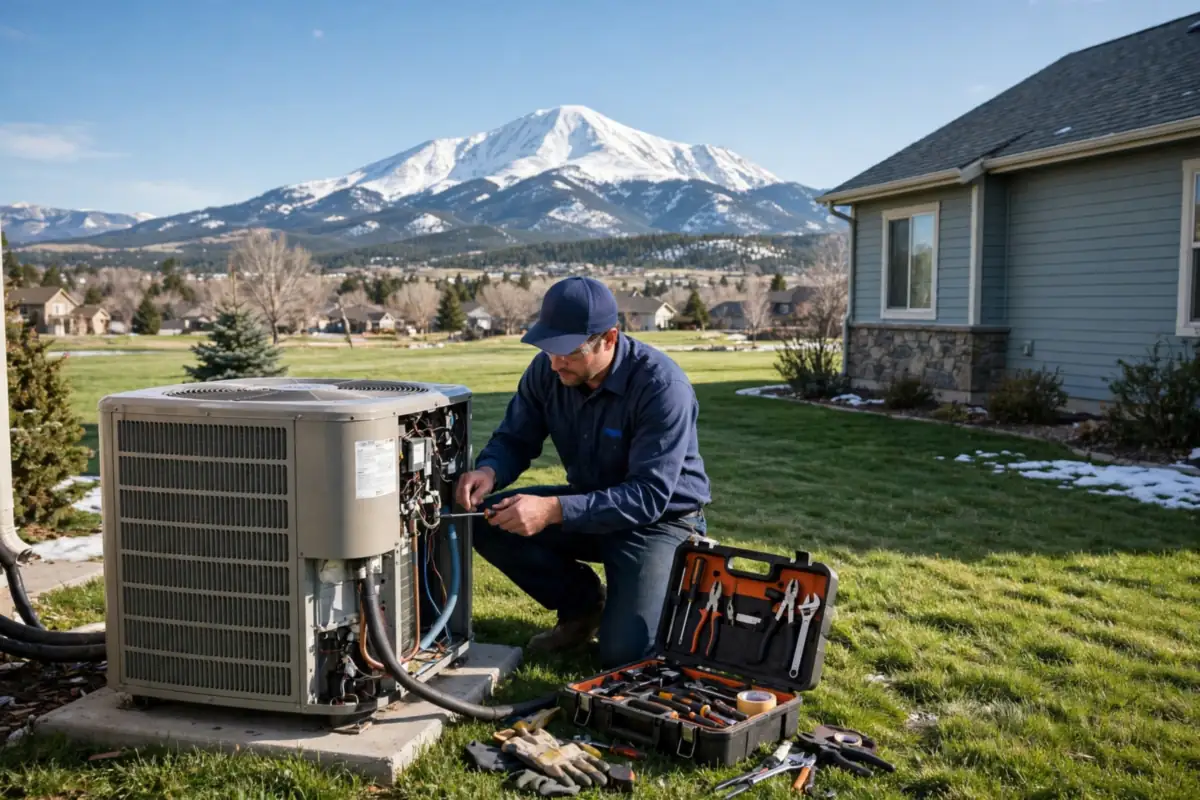
Your air conditioner has quit, the house is heating up, and you need it fixed today. Call AC Repair Colorado Springs and you get the diagnostic fee confirmed before anyone is dispatched, a written itemized quote before any part is fitted, and a repair checked for our 6,000 foot elevation, where cooling systems work harder than they do at sea level. A straight price, honest work, and your cooling back on.
- Written itemized quotes
- Prices published online
- Altitude-checked repairs
- One number, answered locally
What does AC repair cost in Colorado Springs?
Most home AC repairs in El Paso County run between $103 and $877, based on 2025 Manta data, and the common fixes land well inside that range: $150 to $450 for a capacitor or contactor, $200 to $1,500 for a refrigerant leak repair, and $1,500 to $3,000 for a compressor. Every job here is quoted in writing before work starts.
Price is the first thing people search for and the last thing most companies publish. We put our ranges on the internet instead. The table shows typical Colorado Springs prices for the repairs we see most, with parts and labor included. Your exact figure depends on the part your system needs and how it is fitted, and you will see it as a line-by-line quote before you approve anything.
If another company has already quoted you and the number feels high, that instinct is usually right. Quotes in this trade move when a customer hesitates, which is exactly why a written, itemized quote matters. Bring us the quote and we will check it line by line, honestly, including telling you when it is fair.
Read the full AC repair cost guide for Colorado Springs homes, including what drives a price up and how the diagnostic fee works.
And when a repair quote climbs toward replacement money, the furnace replacement cost guide shows what a new furnace runs by tier, so you can judge both paths before you commit to either.
| Common repair | Typical price |
|---|---|
| Diagnostic visit | $89 typical local fee |
| Capacitor or contactor | $150 to $450 |
| Refrigerant leak repair and recharge | $200 to $1,500 |
| Blower motor | $400 to $900 |
| Compressor replacement | $1,500 to $3,000 |
The repair company that publishes its prices and checks for altitude
Most heating and cooling companies ask you to trust them first and show you a price later. We run it the other way round, and it is the whole reason this site exists.
Prices published, quotes in writing
Our repair ranges sit on this website, where anyone can read them. The diagnostic fee is confirmed before anyone is dispatched, and every job is quoted line by line, parts and labor separated, for your approval before work starts. The price you approve is the price on the invoice.
Checked for 6,035 feet
Thin air changes how heating and cooling systems behave. We check altitude on every sizing and repair: derating and pressure settings on gas furnaces, real capacity on air conditioners, and a load calculation with the elevation factored in before any replacement is quoted.
One trade, one number, straight answers
We do heating and cooling only, and you reach us on one phone number, the same in the header, the footer and everywhere else. Second opinions are welcome, including the times when the first company got it right.
Heating and cooling services across the city
One trade, done properly. As an HVAC Colorado Springs team we work on cooling in summer and heating through the long furnace season, because at this elevation both systems earn their keep.
Air conditioning repair
No-cool calls, warm air, frozen coils, short cycling and systems that run all day without keeping up. Diagnosed properly, priced in writing, fixed with parts matched to altitude.
See AC repair pricesFurnace repair
Igniters, flame sensors, blower motors and no-heat calls through the October to April heating season, with every gas furnace checked for correct altitude adjustment.
Furnace repair detailsEmergency repairs
No heat with a cold snap coming, or no cooling in a heat wave with kids and grandparents in the house. Call and we will tell you honestly how fast we can reach you.
How emergency calls workFurnace replacement
When repair stops making sense, we size the new furnace for 6,000 feet, fit the high-altitude kit, and handle permits. Real installed price ranges are published on our cost page.
Furnace replacement costsAC installation
New and replacement air conditioners, including add-on cooling for older homes that were built without it, sized with a load calculation that accounts for elevation.
Plan an AC installationAC maintenance
Seasonal tune-ups that keep a system honest: filters changed, coils cleaned, and refrigerant, airflow and electrical checks done before the first heat wave. Small faults get caught while they are still cheap, not during a 95 degree weekend.
Book a maintenance visitDuct cleaning
Duct cleaning done straight. It is worth it after remodel dust, when vents blow out visible debris, or when the air smells musty. Sold as a scare tactic, it is money wasted. We will tell you plainly which one your home is.
Ask if your home needs itHeat pump repair
Heat pump and dual fuel service and repair at altitude, where defrost cycles and balance points behave differently than they do at sea level. If yours ices up, short cycles, or leans on backup heat too early, we will find out why.
Ask about heat pump serviceDuctless mini splits
Heating and cooling for the homes and rooms ducts never reached: older westside houses, additions, garage workshops, and swamp cooler replacements. Each indoor head runs its own zone, sized for altitude, with published local price ranges.
Explore ductless optionsNot sure whether it is heating or cooling? Start with HVAC repair.
How a repair visit works
Call and describe it
Tell us the symptom: no cooling, warm air, strange noise, ice on the lines. We confirm the diagnostic fee before anyone is dispatched. No surprises later.
Diagnosis and written quote
The technician tests the system, finds the actual fault, and quotes the repair line by line. You approve the price before any part is fitted. If you decline, you owe only the diagnostic fee.
Fixed, tested, explained
We fit the part, run the system through a full cycle, and show you the old part and the readings. You see the invoice before you pay. No tip screen, ever.
Emergency AC repair in Colorado Springs
Emergency ac repair Colorado Springs families need most is simple: a straight answer on the phone and a technician who turns up when promised. Here is how we handle urgent calls.
A cooling emergency here is rarely just about comfort. Heat waves push past 90 degrees, and the houses that suffer most are the ones with babies, elderly parents, or medical equipment inside. In winter the emergency flips: a dead furnace at our January design temperature of 7 degrees puts water pipes at risk of freezing within about a day, sometimes faster in outside walls.
When you call with no cooling or no heating, we triage on the phone. If a simple check fixes it, we will talk you through it for free: thermostat settings, a tripped breaker, a filter so clogged the system shut itself down. If it needs a visit, we give you a realistic arrival window and stick to it, and we tell you the diagnostic fee before the truck rolls.
While you wait for a heating visit, what to do while the furnace is out walks through the safe checks and the pipe protection steps in order.
Call early in the day for the best chance of a same-day visit. Our hours are Mon to Sat 7am to 10pm and Sun 8am to 10pm. If you smell gas at any hour, leave the house first and call 911 or Colorado Springs Utilities from outside. That call always comes before ours.
Why air conditioners lose power at 6,000 feet
Colorado Springs sits at about 6,035 feet. Air here holds roughly 20 percent less mass than sea level air, so an air conditioner gives up about 10 to 15 percent of its rated cooling. A three ton system here does not cool like a three ton system in Dallas, and sizing or repairs that ignore altitude leave you with a system that runs all day and still loses.
Sized for sea level, struggling here
Plenty of systems in this city were sized from a rule of thumb or copied from the unit they replaced. When a homeowner tells us the new AC cannot keep up on a 95 degree day, the cause is often not a broken part at all. It is a load calculation that never accounted for elevation, sun exposure at altitude, or the way our temperature can swing 25 degrees between afternoon and night. We check sizing as part of any replacement conversation, using a proper load calculation with the elevation factor applied, the same standard we publish on our AC installation page. Ask any company quoting you a replacement to show that load calculation, the Manual J, before you sign. A quote with no Manual J behind it was sized by rule of thumb, whatever the salesperson calls it. Heat pumps feel the same thin air in both seasons, which is why heat pump repair here starts with delivered capacity, not parts.
Hail, dust and wildfire smoke
Our weather adds its own wear. Hail season runs April to September, and one hard storm can fold the fins on an outdoor coil flat, choking the airflow the unit breathes through. In fire season, wildfire smoke pushes people to run the fan constantly with a MERV 13 or better filter, the EPA recommendation for smoke events, which loads filters faster than most households expect. Both show up in our repair diary every single year. And when the vents themselves blow out dust and debris, that is not a filter problem at all: it is the one case where duct cleaning earns its money, judged honestly on our duct page.
Swamp coolers are part of life here
Drive the older streets of the west side and you will see evaporative coolers on roof after roof. In our dry air they work well and sip electricity compared with central air, using roughly a quarter of the energy. They do need a rhythm: pads replaced and water lines flushed at spring start up, then a proper drain and cover before the first freeze, or October cold cracks the lines. We service swamp coolers alongside central systems, and if you are weighing one against the other for an older home, we will walk through the honest trade-offs rather than sell you the bigger ticket.
New to the Springs? Families arriving on PCS orders from humid, sea level postings often meet altitude derating on the furnace repair side, swamp coolers and bone dry winter air all in the first season. A whole-system check in your first month catches the surprises while they are still cheap.
Altitude runs through every system in this city, so it gets a guide of its own: the full altitude and derating guide works through the derating table for the higher neighborhoods, the pressure switch pattern behind winter no-heat calls, the carbon monoxide side of burning gas in thin air, and the questions to ask any contractor before you sign.
Guides and advice, written for this city
The emergency checks and the big heating decisions, worked through with Colorado Springs numbers instead of national averages. Start with the one that matches your situation, or browse all HVAC guides for the full set.
Furnace not heating?
Safety first, then the checks in order: thermostat, filter, breaker, vents and snow. What never to touch, and how to protect the house and its pipes while you wait for the visit.
What to do while the furnace is outHeat pump or gas furnace?
The comparison written for a 7 degree design temperature and a Colorado Springs Utilities bill: balance points, altitude derating, running costs by season, and dual fuel as the third option.
Heat pump vs gas furnace, honestly comparedWhat 6,035 feet does to your system
The derating maths with real numbers, the pressure switch pattern behind furnaces that will not light, combustion and carbon monoxide in thin air, and what an altitude-checked job actually verifies.
HVAC at 6,000 feet, explainedWhy is the house so dry?
Winter air here falls under 20 percent humidity: the static, the cracked wood floors, the thermostat that keeps creeping up. The three humidifier types compared, sizing at altitude, the pad upkeep nobody mentions, and when a portable is honestly enough.
Whole home humidifiers, honestly explainedPCS orders to Colorado Springs?
The move-in checklist for military families: questions to ask before you sign, the move-in day walkthrough, first-week and first-month checks, the red flags worth raising before you accept the keys, and the handover paperwork that protects both sides of a rental.
PCS move-in HVAC checklistChoosing an HVAC company?
The October 2026 comparison checks published prices, cost guides, displayed review figures, phone consistency, and service structure across the established companies and our new one. It starts with how to judge any company, including us, and does not assign a ranking.
Compare the companies by published factsAC repair Colorado Springs, without the sales pitch
Read the reviews of any trade in this city and the same complaints repeat: quotes that change, fees that were "waived" then charged, and tune-up visits that turn into five figure replacement pitches. What a real tune-up includes is published on our AC maintenance page, checklist and written report included. This site exists to run the opposite way.
What we promise, in writing
Published prices. Our repair ranges are on this website for anyone to read, including people who never call us. If the market moves, the page gets updated, not quietly buried.
Itemized quotes. Every repair is quoted line by line, parts and labor separated, and the price is confirmed before work starts. The number you approve is the number on the invoice.
See the invoice before you pay. You read the full bill, see the old part, and see the test readings. There is no payment screen asking for a tip on top of a repair bill.
One phone number. Some local firms run three or four different numbers across their own websites. Ours is the same in the header, the footer, and everywhere else: +1 (719) 403-0628.
Backed for 12 months. Every repair is backed for 12 months: if our workmanship fails, we return and put it right at no labor charge. Parts carry the manufacturer's warranty; we register your equipment and handle the claim paperwork.
Diagnoses that deserve a second opinion
Been handed a big quote? These claims should always slow you down, and a second look costs little:
- Cracked heat exchanger. Ask for the camera inspection footage of your own furnace and the carbon monoxide reading in writing before agreeing to a replacement.
- "R-22 is illegal now." It is not. Production was phased out, but using existing R-22 is legal. What you need is a leak found and fixed, not a top-up sold by the visit.
- Refrigerant sold without a weight. Refrigerant should be charged by weight, cylinder weighed before and after. A flat "recharge" price with no leak search is money vented.
- Hard-start kit sold as a cure. A compressor saver is a small add-on that helps a compressor start. Pitched as the fix for a struggling compressor, it can hide a dying unit, or a simple capacitor fault, for a few weeks. Ask what test showed the compressor needs help starting.
- Substitute refrigerant sold as "Freon". Drop-in substitutes are not R-22, and mixing refrigerants creates problems nobody can price honestly. Ask for the exact name of the refrigerant going into your system, and its weight.
- "Your control board is burned." Boards darken with heat and age in normal service. Darkening on its own is not a failure. Ask for the test readings that prove the board is faulty before paying to replace it.
- "It is just too old." Age is not a diagnosis. An older system with a sound heat exchanger and a cheap fault is a repair, not a replacement. Ask what actually failed, and what the repair costs next to a new system.
We give second opinions straight, including when the first company got it right. Call +1 (719) 403-0628 or write to [email protected].
Who turns up at your door
No call center and no rotating cast of strangers. When you book with us, these are the roles that handle your job, from the first call to the final invoice.
Lead repair technician
The person who diagnoses your system, tests before replacing anything, and writes your quote line by line. You approve the price with them before any part is fitted, and you see the old part and the readings when the job is done.
Furnace and heating specialist
Heating work at 6,000 feet has its own rules. This role covers furnace derating, pressure settings, combustion readings and heat exchanger checks. If a heat exchanger is condemned, you are shown the evidence from your own furnace before anyone talks replacement.
Your local contact
One person answers the number on this site, books your visit, and gives you a realistic arrival window. The same contact handles second opinions: send over a quote you have been given and it gets checked line by line.
Hard jobs, handled properly
Not every call is a quick part swap. These are the difficult ones this company is set up for: the disputed diagnosis, the install that was never set up for this altitude, and the fault that keeps coming back.
The second-opinion heat exchanger
A homeowner told their furnace is condemned faces an expensive decision on someone else's word. Our technician photographs the heat exchanger inside your furnace, takes the combustion readings, and shows you both. The verdict comes in writing either way: repair it if the evidence says it is sound, and talk replacement only if the photos and readings say otherwise. That is a furnace second opinion done properly, before any money moves.
The sea level install rescue
A furnace fitted with no altitude adjustment soots up, locks out, and short cycles through the heating season. We derate the burner input properly, 4 percent for every 1,000 feet above 2,000 feet, fit the high-altitude kit, and pressure-check the system so it burns clean at 6,035 feet. That setup step is built into a furnace installation done for this altitude from the start.
The leak that kept getting topped up
A system that takes refrigerant every season has a leak, not a thirst. We run an electronic leak search, fix the leak at its source, and charge the refrigerant by weight, with the cylinder weighed before and after. The next season should not need the same visit again. Before you pay for another top up, see what leak testing should cost.
Areas we serve across Colorado Springs
Based on N Academy Blvd in the north of the city, we cover Colorado Springs end to end, from Monument down to Fountain and from Manitou Springs out to Falcon.
- Briargate 80920
- Powers Corridor 80922
- Stetson Hills 80923
- Old Colorado City 80904
- Downtown 80903
- Broadmoor 80906
- Rockrimmon 80919
- Mountain Shadows 80919
- Cimarron Hills 80915
- Security-Widefield 80911
- Fort Carson 80913
- Fountain 80817
- Falcon 80831
- Monument 80132
- Black Forest 80908
- Manitou Springs 80829
- Northgate 80921
- Wolf Ranch 80924
- Banning Lewis Ranch 80927
- Flying Horse 80921
The map shows our base at 3825 N Academy Blvd, Colorado Springs, CO 80917. The work itself happens in your home, and the city's housing tells us what to expect before we arrive: turn of the century systems and swamp coolers in Old Colorado City and the Old North End, 1960s to 1990s stock ageing through its second replacement round in the southeast near Peterson, and builder grade systems in the Powers corridor and Banning Lewis Ranch now hitting the age where first failures cluster. Twelve areas now have their own pages: read about all service areas for the housing, the fault patterns, and the local questions in each.
Military households are a big part of this city, with Fort Carson, Peterson, Schriever, Cheyenne Mountain and the Air Force Academy all ringing the metro. Landlords and property managers in Security-Widefield, Fountain and the southeast use us for fast, documented repairs that keep tenants warm and leases intact.
- 80902
- 80903
- 80904
- 80905
- 80906
- 80907
- 80908
- 80909
- 80910
- 80911
- 80912
- 80913
- 80914
- 80915
- 80916
- 80917
- 80918
- 80919
- 80920
- 80921
- 80922
- 80923
- 80924
- 80925
- 80926
- 80927
- 80928
- 80929
- 80930
- 80938
- 80939
- 80951
- 80817
- 80829
- 80831
- 80863
- 80866
- 80132
Common questions about AC repair
Questions that cover heating and cooling together, rather than one system at a time, live on our HVAC repair page.
How much does AC repair cost in Colorado Springs?
Most home AC repairs in El Paso County fall between $103 and $877, based on 2025 Manta survey data for the county. Simple fixes like a capacitor or contactor usually run $150 to $450 with parts and labor. Compressor work is the expensive end, at $1,500 to $3,000. Your price is confirmed in a written, itemized quote before any work starts.
Why is my AC blowing warm air but the outdoor unit is running?
Warm air with a running outdoor unit usually points to one of four things: a failed capacitor that stops the compressor starting properly, low refrigerant from a leak, a dirty condenser coil that cannot shed heat, or a frozen indoor coil from poor airflow. Check your filter first. If the filter is clean and the air stays warm, the system needs a technician, not more run time.
Can a dirty filter really stop my AC from cooling?
Yes. A clogged filter starves the indoor coil of air, the coil gets too cold, and ice builds up until almost no air passes at all. At 6,000 feet the air is already about 20 percent thinner than at sea level, so our systems have less airflow margin to begin with. In many Colorado Springs homes the filter needs changing every one to two months, not every season.
How long should I leave my AC off to thaw a frozen coil?
Turn the system off and run the fan on its own for at least three to four hours, and longer if ice is visible on the copper lines. Never chip at the ice. If the coil freezes again within a day or two of thawing, something else is wrong, usually low refrigerant or failing airflow, and it needs a proper diagnosis rather than another thaw.
Does altitude affect air conditioning in Colorado Springs?
It does. At roughly 6,000 feet, an air conditioner delivers about 10 to 15 percent less cooling than its nameplate rating, because the thin air carries heat away more slowly and the fan moves less air mass. A system sized using sea level assumptions can run all day and still lose ground on a 95 degree afternoon. Correct sizing here means a load calculation with the elevation factored in.
Can hail damage my AC unit?
Yes, and hail season here runs from April to September. Hail bends the thin fins on the outdoor coil, which chokes airflow and quietly raises your bills and wear. Bent fins can often be combed straight, and hail guards protect the coil from the next storm. If a storm damaged your unit, photograph it promptly, because storm damage is often a homeowners insurance question rather than a repair bill.
Why do HVAC companies charge just to come out?
A diagnostic visit pays for a trained technician, a stocked truck, and the time to test the system properly instead of guessing. What matters is honesty around it: the fee should be confirmed before anyone is dispatched, it should never show up later as a surprise after being described as waived, and you should see the full repair price in writing before you agree to the fix.
Is your repair work guaranteed?
Yes. Every repair is backed for 12 months: if our workmanship fails, we return and put it right at no labor charge. Parts carry the manufacturer's warranty; we register your equipment and handle the claim paperwork.
Should I switch from a swamp cooler to central AC?
It depends on your house. Swamp coolers work well in our dry climate, use far less electricity than central air, and many older homes on the west side run them happily with spring start up and fall winterising each year. Central AC wins on very humid monsoon days, in homes that need even cooling in every room, and where allergies make added filtration matter. We service both and will tell you plainly which fits your house.
Air conditioner down? Talk to a local.
One call gets you a confirmed diagnostic fee, a written itemized quote, and a repair checked for altitude. No call center, no pressure, no games with the price.
Call +1 (719) 403-0628